
Water Damage Restoration New Haven CT
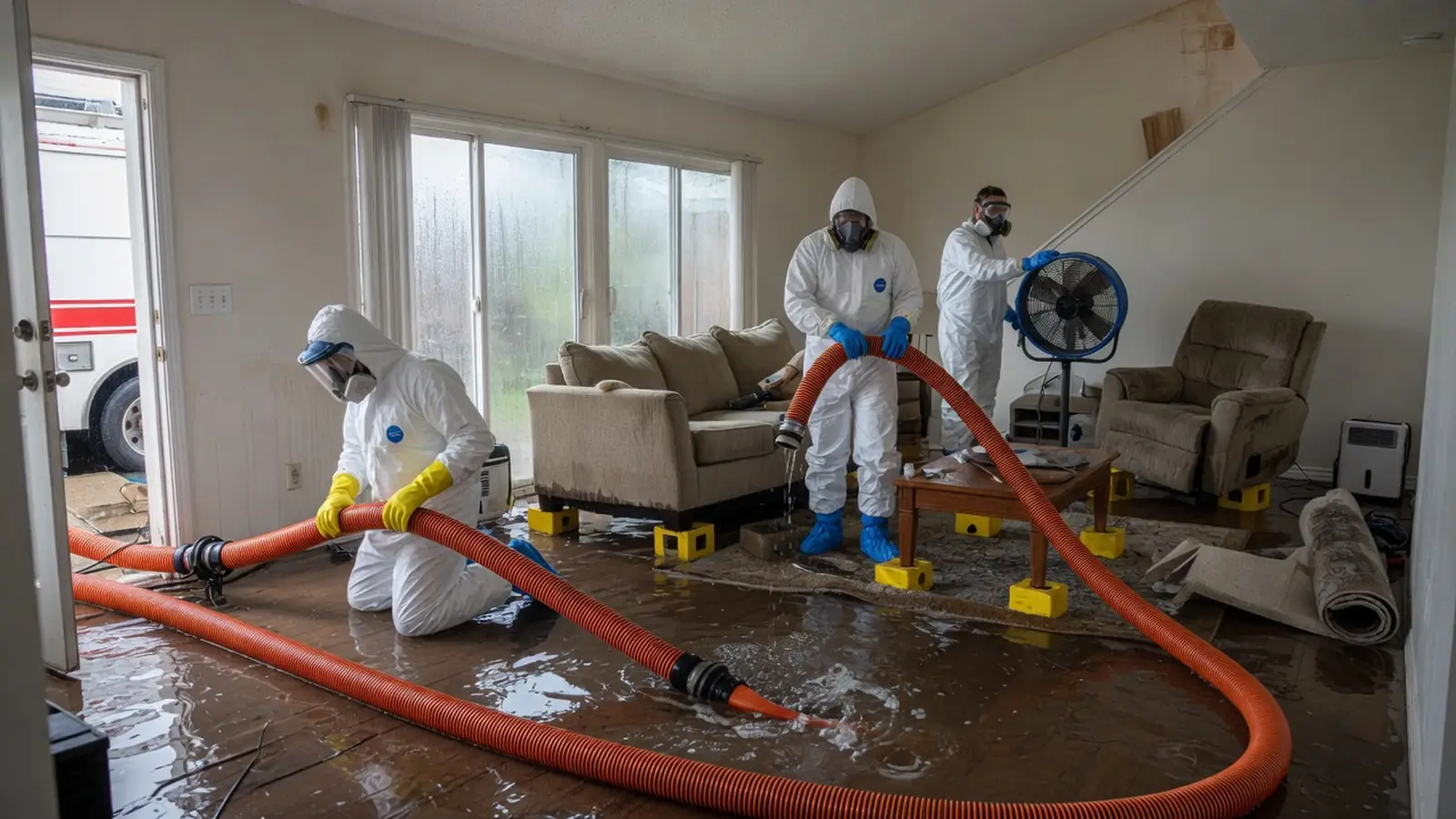
Shoreline flash storms cause simultaneous neighborhood basement inundations, requiring emergency extraction before stagnant water triggers mold growth. Our rapid response crew deploys commercial extraction units, subfloor drying mats, and industrial dehumidifiers to stabilize flooded properties immediately. We eliminate trapped moisture behind walls and floors to protect your home from long-term structural decay.
For a burst line that's still running, call (203) 555-0143.
Prefer to talk? (203) 555-0143
Affordable Water Extraction And Structural Drying
Our restoration team specializes in mitigating water intrusion across coastal neighborhoods with distinctive historic architecture.
About 59% of local housing units (35,114 of 59,097) were built before 1960, the era of galvanized steel supply lines and cast iron drains prone to sudden internal ruptures.
About 88% of housing units across the area (52,289 of 59,097) were built before 1980, the period when asbestos-containing materials and lead paint were still in use, requiring containment during demolition.
About 13% of residential units (7,479 of 59,097) were built in the 1960s, overlapping the years aluminium branch wiring was installed, demanding electrical safety precautions during moisture extraction.
About 16% of area homes (9,696 of 59,097) were built in the 1970s and 1980s, overlapping the years polybutylene supply piping was commonly installed and prone to spontaneous failure.
A pattern echoed in public discussions is that historic colonial homes frequently experience repeated basement water intrusion and pooling water shortly after purchase due to aging drainage.
Homeowners often describe how coastal storm surges and heavy rainfall seep through older stone rubble foundations in low-lying coastal neighborhoods, driving high humidity and flooding.
Property owners dealing with unexpected moisture can learn how we handle severe basement flooding emergencies before groundwater damages structural framing.
We deploy thermal cameras and penetrating moisture meters on every job to locate hidden moisture paths without performing unnecessary demolition.
How We Resolve Emergency Water Intrusion
When water invades your living space, structured rapid mitigation stops secondary rot and electrical hazards before moisture migrates deeper into wall cavities.
- Immediate Containment And Rapid Water Extraction. Unattended upper-floor pipe bursts cause cascading multi-level structural flooding, penetrating ceiling assemblies and wall cavities within hours. We immediately shut off main supplies, extract standing water using high-volume truck-mounted vacuum systems, and relieve hydrostatic pressure on sagging ceilings.
- Thermal Imaging And Moisture Mapping. Public discussions highlight that pipes that split during freezes can thaw and spray unnoticed inside ceiling joists, saturating insulation and causing drywall ceilings to collapse. We trace thermal anomalies across joist bays and supply comprehensive structural mitigation for frozen pipes to isolate hidden cavities before materials fail.
- Targeted Demolition And Structural Cavity Venting. We remove unsalvageable porous baseboards and perform controlled flood cuts only where moisture meters indicate saturation behind walls. Precision air injectors and cavity drying ducts force heated, dry air directly into wet stud bays to preserve as much original woodwork as possible.
- Controlled Dehumidification And Antimicrobial Treatment. We position commercial low-grain refrigerant dehumidifiers and high-velocity axial air movers to extract bound moisture from wood sills, subfloors, and structural framing. Technicians apply EPA-registered botanical antimicrobials across exposed surfaces to inhibit bacterial proliferation while continuous drying runs until target dry standards are verified.
Certified Technical Precision And Workmanship Standard
Proper structural recovery requires IICRC-certified technical drying protocols to eliminate concealed moisture before mold colonization begins. We adhere strictly to national restoration standards, using daily psychrometric data logs, temperature mapping, and penetrating moisture probes to ensure structural framing reaches equilibrium moisture content. Whenever saturated framing remains damp for over 48 hours, our crew implements professional containment protocols for mold remediation to safeguard your indoor air.
Emergency Water Extraction And Sump Backup Pumping
When localized flooding overwhelms sub-grade drains, our rapid-response crew deploys submersible pumps and truck-mounted extractors to remove standing water quickly. We clear standing water from utility rooms and finished living areas, mitigating hydrostatic pressure against foundation walls.
Ceiling Cavity And Burst Pipe Extraction
Pipes that split during freezes can thaw and spray unnoticed inside ceiling joists, saturating insulation and causing drywall ceilings to collapse. Our emergency crew opens inspection ports, vacuums standing water, and deploys directed air movers to stabilize overhead assemblies before structural failure occurs.
Storm Damage And Roof Leak Dry-Out
Severe weather frequently punctures building envelopes, as NOAA radar recorded 314 hail signatures within about 15 miles between 2021-2025 (2021: 67, 2022: 19, 2023: 109, 2024: 101, 2025: 18). The heaviest recent hail year was 2023, with 109 radar hail signatures inside a 15-mile radius, driving hidden roof penetrations that cascade through attic spaces.
Our Commitment To Scientific Structural Restorations
We approach every water intrusion with disciplined drying science, prioritizing structural integrity, strict environmental containment, and transparent daily monitoring logs for homeowners and adjusters alike.
- 12Zip Codes Served
- 8Service Areas
- 3Services Offered
Local property owners rely on our certified drying technicians when sudden plumbing bursts or storm intrusions threaten their homes. Here is what residents share about our rapid containment, technical moisture tracking, and courteous on-site service.
“When our adjoining condo unit started seeing runoff, the crew immediately met with our association president to explain our containment plan. They kept the industrial air movers muffled during quiet hours and routed all extraction lines without blocking the shared driveway. The whole board was impressed with how clean and considerate they kept the common hallways.”
Marcus T.
“Six months after our basement was completely drowned by heavy runoff, there is zero musty smell and the framing remains bone dry. The team did not just pull the standing water; they tracked hidden moisture behind our baseboards until every meter read normal. Having gone through an entire humid summer since then with pristine air quality proves their drying protocol worked.”
Elena R.
“My elderly mother uses a walker, so having huge drying fans and hoses running through the hallway was a serious fall hazard. The crew carefully taped down every power cord, kept clear walkways to her bedroom, and checked on our rescue dog whenever equipment cycled on. Their patience and thoughtfulness made a terrifying situation feel completely manageable.”
Julian K.
“Another contractor quoted us a bargain rate but planned to simply paint over the wet subfloor without pulling the soaked insulation below it. The team showed us moisture probe readings proving that water had wicked upwards, and they properly stripped the damaged materials before drying the subflooring. Paying for thorough, certified remediation saved us thousands compared to the secondary rot that the cheap bid would have caused.”
Siddharth V.
Frequently Asked Questions
Can waterlogged drywall and baseboards in a finished basement be dried in place, or do they have to be cut out two feet above the water line?
Drywall and baseboards can be dried in place only under clean water losses caught within 24 hours; otherwise, cutting two feet above water is required. When water carries contaminants or saturation exceeds 48 hours, sheetrock wicks moisture upward, necessitating a clean two-foot flood cut to vent wall cavities and stop mold colonization.
Does leaving faucets dripping during a freeze prevent burst pipes without causing water damage?
Dripping faucets relieve supply pressure, yet frozen or sluggish drains frequently trigger severe sink overflows and major interior water damage. Homeowners frequently report that leaving faucets dripping to prevent frozen pipes creates interior overflow damage if sink drains are partially frozen, slow, or blocked, turning a preventative freeze measure into a catastrophic multi-room remediation event.
How long does the structural drying process typically take after extraction?
Complete structural drying typically takes between three to five days depending on material saturation, ambient humidity, and cavity ventilation. Technicians track moisture content daily using psychrometric calculations and moisture meters, only pulling equipment once wood studs and subfloors reach baseline equilibrium levels.
Does homeowner insurance cover water damage restoration from burst supply pipes?
Standard homeowners insurance policies generally cover sudden and accidental pipe bursts, while gradual leaks or deferred maintenance are excluded. We provide comprehensive documentation including date-stamped moisture mapping, psychrometric records, and itemized structural line items to streamline direct claims processing.
What safety precautions are required when mitigating water damage in pre-1980 homes?
Pre-1980 homes require strict containment before demolition to prevent releasing hazardous airborne asbestos or toxic lead paint particles. Because 88% of local housing units date before 1980, our technicians test suspected materials and set up HEPA-filtered negative air zones prior to opening walls or ceilings.