
New Haven Frozen Pipes
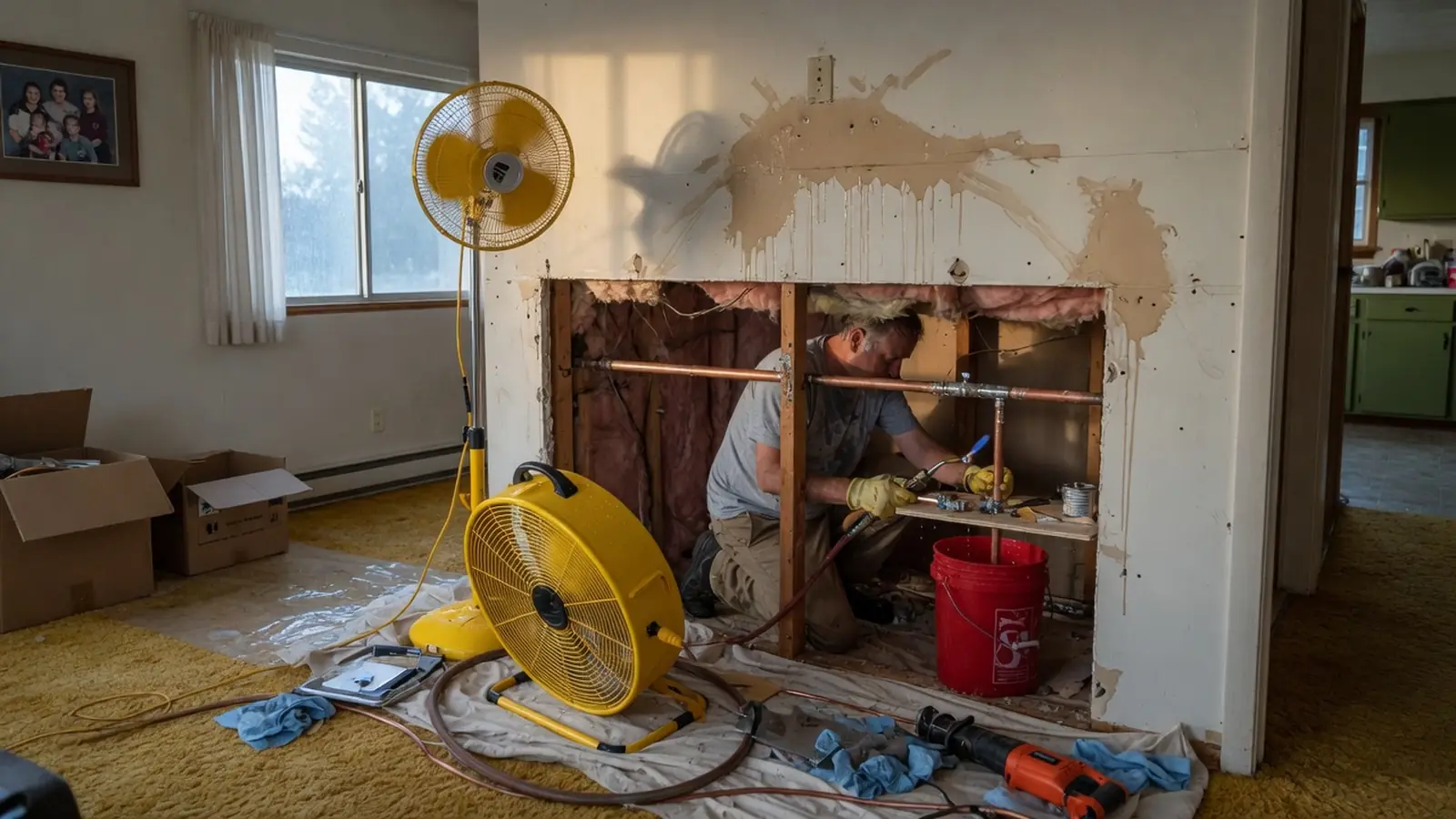
When sub-zero coastal temperatures split indoor supply plumbing, our certified restoration technicians mobilize immediately to extract pooling water and stabilize saturated framing. We utilize commercial desiccant dehumidifiers and precision thermal imaging to dry concealed ceiling joists and wall cavities before catastrophic rot or mold takes hold.
(203) 555-0143 reaches us right away.
Prefer to talk? (203) 555-0143
Dedicated Freeze Recovery Specialists
According to Census ACS 5-year data, the median owner-occupied home locally was built in 1951, presenting unique vulnerabilities when freezing temperatures arrive.
About 59% of housing units here (35,114 of 59,097) were built before 1960, the era of galvanized steel supply lines and cast iron drains that crack under radial thermal stress.
About 8% of housing units in the area (4,835 of 59,097) were built since 2000, so a substantial share of the local stock is still on its original systems.
Homeowners often describe how unconditioned and drafty crawl spaces repeatedly freeze water supply lines during winter cold snaps, risking catastrophic pipe failures across older neighborhoods from East Rock to Westville.
When pressurized plumbing breaks during a deep freeze, property owners rely on our certified technicians for comprehensive structural drying and water restoration services to stabilize the building envelope.
Our crews deploy non-invasive thermal imaging cameras and commercial dehumidifiers to locate hidden moisture pockets without unnecessarily tearing down intact architectural details.
Our Frozen Pipe Thawing And Water Damage Restoration Process
Restoring frozen and burst plumbing requires systematic thermal mitigation, pressure testing, and moisture extraction to prevent structural failure.
- Emergency Shut-Off And Line Isolation. Homeowners often report that inaccessible water main shut-off valves delay stoppage during bursts, turning high-pressure line breaks into rapid, multi-room basement floods. Our emergency team immediately isolates the breached branch lines, secures primary containment, and stops further water intrusion before assessing plumbing damage.
- Safe Thawing And Controlled Pressure Testing. Ice blockages expand radially and split copper or PEX tubing behind walls, meaning technicians must isolate and pressure-test supply lines before restoring the main water supply. While boosting indoor heat to 72-73°F ahead of severe cold snaps forces warmth into uninsulated wall voids, protecting concealed plumbing runs, active freeze splits require controlled thawing under continuous diagnostic monitoring.
- Concealed Moisture Detection And Joist Inspection. Pipes that split during freezes can thaw and spray unnoticed inside ceiling joists, saturating insulation and causing drywall ceilings to collapse. We utilize deep-penetrating infrared sensors and calibrated moisture meters to map moisture paths throughout subflooring, wall cavities, and finished ceilings.
- Structural Extraction And Antimicrobial Drying. We extract standing water, remove saturated porous insulation, and position high-velocity air movers alongside commercial desiccant dehumidifiers. If you need emergency pumping for severe basement flooding, our heavy-duty extraction pumps extract deep pooling so framing can dry to target equilibrium levels.
Our Thorough Approach To Pipe Freeze Recovery
A pattern echoed in public discussions is that bathroom exhaust fans venting directly into unconditioned attics introduce excessive humidity that fuels widespread mold growth on roof sheathing and rafters, so we combine thermal drying with preventative antimicrobial treatments for long-term mold remediation on exposed timber. Our technicians follow strict industry drying guidelines, documenting psychrometric readings daily until all structural wood and wall assemblies return to dry standard conditions.
Frozen Pipe Thawing And Leak Isolation
Using controlled thermal application and acoustic listening gear, our technicians pinpoint freeze blockages and hairline fractures without open-flame hazards. We isolate vulnerable sections quickly to prevent pressurized blowouts across your distribution lines.
Cavity Dehumidification And Joist Drying
When thawing pipes spray inside subfloors or ceiling framing, trapped moisture degrades sheetrock and fosters rapid microbial blooms. We direct focused warm airflow and industrial dehumidification into closed cavities to dry hidden structural lumber thoroughly.
Burst Plumbing Cleanup And Rebuild
Following major winter freeze splits, we remove flood water, strip ruined insulation, and sanitize every contact surface. Our restoration carpenters reinstall drywall, flooring, and trim to return your living spaces to pre-loss condition.
Committed To Restoring Properties After Deep Freezes
When sub-zero weather causes sudden plumbing failures, our response team arrives equipped with industrial dehumidifiers, moisture meters, and structural drying equipment. We focus on stabilizing building assemblies quickly, eliminating standing water, and verifying that internal cavities reach balanced moisture levels.
- 10Zip Codes Served
- 4Service Areas
- 3Services Offered
Homeowners across our community share their direct experiences after our crews stabilized their properties during winter pipe emergencies.
“When our second-floor copper lines burst during the January freeze, the crew handled the local building inspection paperwork seamlessly before closing the walls back up. They documented every moisture reading for the building official so the final sign-off went through without a single hiccup. It gave us huge peace of mind knowing the structural repairs met exact building standards.”
Marcus T.
“Our kitchen ceiling began gushing water at two in the morning on a sub-zero Sunday. The team answered our call immediately and had an extraction truck outside our front door within forty-five minutes. Their prompt action stopped five rooms of hardwood flooring from completely buckling.”
Elena R.
“After drying out our flooded drywall, the crew hung new sheetrock and blended the ceiling texture so cleanly that the seams are entirely undetectable. Even under direct morning sunlight, the paint transition and plaster joints look as smooth as the day the house was originally constructed. Their attention to detail on the finished carpentry was top notch.”
David K.
“Seeing how thoroughly they dried our crawl space convinced me to recommend this company to my brother down the street when his bathroom supply pipe froze the following week. He called them that afternoon and received the exact same prompt, professional restoration service. Anyone dealing with winter water damage should keep their number handy.”
Brenda M.
Frequently Asked Questions
What is the immediate priority when a water pipe freezes and bursts?
Shut off your main water valve immediately to stop flooding, then call a certified restoration professional to begin thermal structural drying. Fast extraction prevents saturated building materials from sagging, warping, or developing hazardous fungal growth within concealed cavities.
How long does it typically take to dry a home after a frozen pipe rupture?
Complete structural drying typically requires three to five days using industrial dehumidifiers and directed high-volume airflow equipment. Drying time varies depending on whether water penetrated wall cavities, subflooring, or overhead plaster ceilings.
Does homeowner insurance generally cover damage caused by frozen pipes?
Most standard policies cover sudden pipe freeze damage provided the property maintained adequate heating before the freeze occurred. Restoration teams provide comprehensive moisture logs and photographic documentation to substantiate your claim with adjusters.
Can I safely thaw frozen plumbing lines on my own with an open torch?
Never use an open flame torch to thaw frozen lines because doing so presents severe fire risks and may cause sudden thermal pipe explosion. Professional crews apply regulated thermal equipment to heat pipes gradually while monitoring pressure stability.
Why do older regional residences suffer more freeze bursts during cold snaps?
Older residences often lack perimeter insulation and feature unconditioned crawl spaces where drafty winter air chills supply pipes directly. Vintage homes with galvanized steel lines or unheated chases require proactive temperature monitoring to prevent radial freezing.