
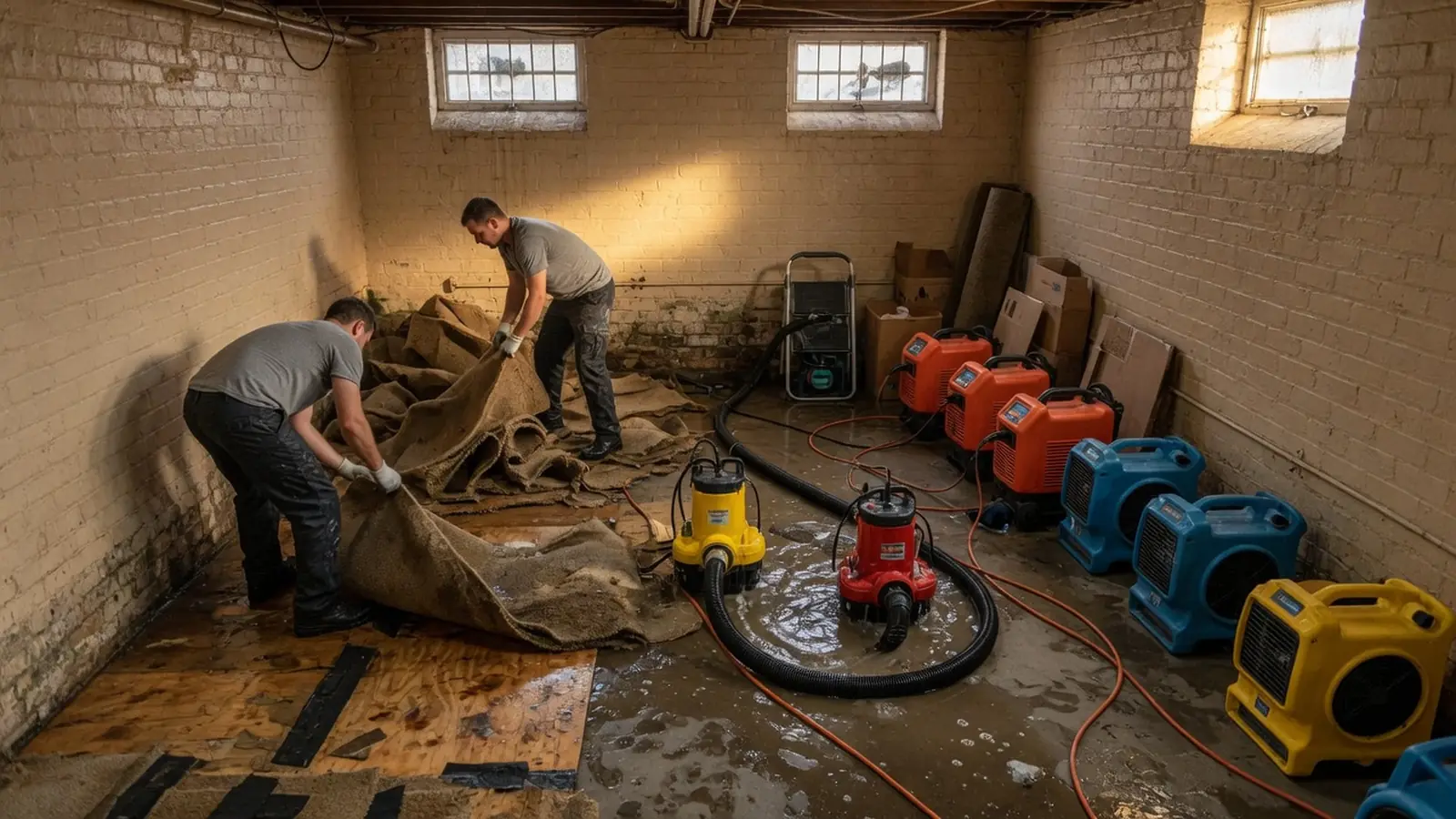
New Haven Basement Flooding
Coastal storm surges and heavy rainfall seep through older stone rubble foundations in low-lying coastal neighborhoods, driving high humidity and flooding. Historic colonial homes frequently experience repeated basement water intrusion and pooling water shortly after purchase due to aging drainage. Our emergency flood response technicians deploy commercial extraction gear to remove pooling moisture and stabilize your foundation quickly.
Call (203) 555-0143 if you're standing in it.
Prefer to talk? (203) 555-0143
Emergency Basement Flooding Restoration
Our technicians have spent years managing localized sub-grade water intrusion across older coastal residential districts.
In low-lying coastal sections, chronic summertime humidity combined with foundation seepage allows hidden mold colonies to spread behind baseboards and up drywall framing.
We arrive with commercial truck-mounted pumps and structural drying systems to tackle complex subsurface water emergencies.
Every project begins with thorough thermal moisture mapping to identify every hidden pocket of saturated framing.
We provide comprehensive water damage restoration for flooded lower levels to protect historic architectural framing from rot.
Our dedicated crew communicates directly with homeowners throughout every stage of water extraction and sanitation.
Our Step-by-Step Flood Recovery Process
During severe downpours, a pattern echoed in public discussions is that flash flooding overburdens municipal sewer laterals, pushing contaminated sewage water backward through residential basement floor drains, requiring immediate systematic intervention.
- Immediate Pumping And Float Inspection. As homeowners often describe during severe storms, debris and twisted power cords can trap a sump pump's vertical float switch against the pit basin, preventing activation as water rises, which is why our crew immediately checks pump mechanics while deploying auxiliary extraction units.
- Commercial Pumping And Moisture Removal. Extracting 3 to 9 inches of standing floodwater requires commercial pumping and dehumidification to prevent permanent subfloor and sill plate rot before moisture wicks into upper framing.
- Antimicrobial Treatment And Cavity Drying. Because storm winds that knock out grid power disable electric sump pumps, leaving finished basements vulnerable to standing water without battery backups, our specialists focus on safely removing microbial growth from interior wall cavities using EPA-registered disinfectants.
- Structural Moisture Verification. We track ambient relative humidity and wood moisture content with non-invasive sensors until foundation framing matches baseline structural standards.
Affordable Basement Flood Cleanup Standards
When water emergencies strike, inaccessible water main shut-off valves delay stoppage during bursts, turning high-pressure line breaks into rapid, multi-room basement floods that threaten the entire foundation. We provide rapid structural drying and emergency response for burst frozen pipes backed by meticulous moisture logging, transparent communication, and verified structural stabilization standards without shortcutting containment.
Emergency Floodwater Extraction
Our high-capacity truck-mounted submersible units eliminate pooled floodwater quickly from finished and unfinished basements to halt structural decay.
Sewer Lateral Backup Sanitization
We contain, clean, and decontaminate lower levels impacted by municipal backflow using hospital-grade antimicrobial solutions and pressurized flushing.
Foundation Dehumidification
We install commercial desiccant and LGR dehumidifiers alongside directional air movers to extract trapped moisture from porous masonry walls.
Our Commitment To Rapid Flood Recovery
We focus entirely on prompt mitigation, industrial moisture extraction, and verifiable structural drying to help homeowners recover safely from unexpected basement flooding events.
- 14Zip Codes Served
- 8Service Areas
- 3Services Offered
Local property owners rely on our responsive flood mitigation and structural drying crews during unexpected basement flooding emergencies.
“Instead of tearing out our entire perimeter drywall, the technician explained how selective flood cuts and closed-cell vapor barriers would protect the framing while saving thousands on drywall replacement. The crew set up high-velocity air movers right away, and our lower level was completely dry within four days. Their practical advice saved us from unnecessary remodeling expenses.”
Marcus B.
“We received an initial estimate from an independent pump operator who planned to extract the standing pool and leave without taking any moisture readings. The crew we hired brought thermal cameras and showed us moisture that had already wicked six inches up the sill plates. Choosing them prevented what would have been catastrophic subfloor rot down the road.”
Elena G.
“Municipal backflow prevention regulations can be tricky after a major sewer drain surge, but this company knew the exact local plumbing code requirements. They coordinated the required backflow valve installation and signed off on the sanitization documentation immediately. The inspector cleared the work on his very first walkthrough.”
Arthur P.
“Our basement flooded on a Sunday evening when the float switch failed during a downpour, and they responded to our emergency dispatch within thirty minutes. The crew arrived with submersible pumps before midnight and worked straight through the night until the concrete slab was bare. That prompt nighttime intervention saved our finished family room.”
Danielle K.
Frequently Asked Questions
How long does professional basement water extraction take?
Basement flood pumping typically finishes within four to eight hours, followed by three to five days of industrial structural dehumidification. Structural drying times depend on whether moisture reached sill plates or subflooring.
Does homeowner insurance cover basement flooding repairs?
Standard homeowner insurance policies cover sudden internal pipe bursts but routinely exclude groundwater seepage without a separate endorsement. Flood insurance or a dedicated sewer backup rider is required for external water intrusion.
Why did my sump pump fail during the heavy rainstorm?
Sump pump failures require immediate mechanical inspection because trapped vertical float switches or dead electrical circuits prevent drainage. Power outages without battery backup or physical basin debris are the leading causes.
What should I do if raw sewage backs up into my basement?
Sewer lateral backflow demands professional sanitization because floodwaters carry biohazardous waste, requiring anti-microbial treatments. Avoid all contact with the standing blackwater, shut off basement electricity, and call for emergency extraction.
How do you dry wet stone rubble foundations in historic homes?
Rubble stone foundations require controlled drying and positive drainage grading to prevent water seepage without eroding historic mortar joints. High-volume dehumidifiers and specialized air movers pull trapped dampness from masonry walls safely.